
Decoding Trends in Gen Z Footwear
Discover which footwear brands are expanding their cultural moat with Gen Z and which are losing ground.
The Quick Read
- Convert Initial Trend Hype into Lasting Trust: Fast-growing challenger brands must invest in structural brand affinity and consumer confidence before novelty fades and growth hits a ceiling.
- Capitalize on Lifestyle Crossover: Double down on everyday utility and tech-driven aesthetics, as Gen Z favors brands that blend high performance with seamless daily wearability.
- Protect Heritage Equity with Innovation: Heritage alone no longer guarantees brand loyalty; legacy brands must actively modernize classic silhouettes to prevent stagnation and decline.
The Shift from Hype Culture to Technical Utility
The Gen Z footwear landscape has undergone a realignment over the last 18 months. Youth culture has shifted away from traditional, basketball-centric hype culture toward running-tech aesthetics, gorpcore utility, and retro low-profile lifestyle silhouettes. While market heavyweights continue to dominate total mindshare, nimble performance brands and revived retro icons are capturing a disproportionate share of cultural momentum.
Brands that aligned with Gen Z’s evolving preferences for comfort, versatility, and authentic subculture connections saw swift gains. Conversely, legacy lifestyle players that relied primarily on past nostalgia without updating their product experience suffered notable drops in cultural relevance. Understanding where your brand sits across long-term cultural fluency and short-term velocity is now essential for protecting market share.
Quadrant Dynamics: The Flight Toward Practical Utility and Tech-Aesthetics
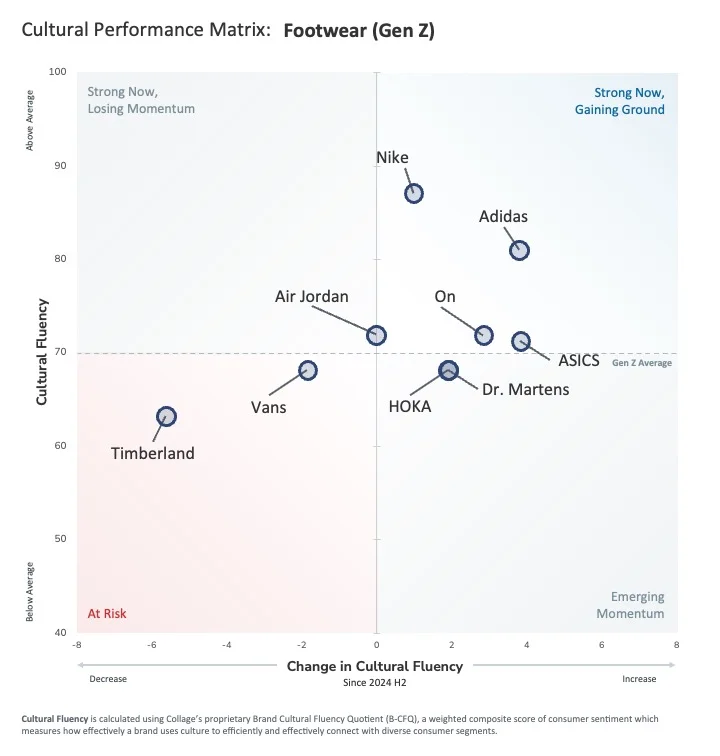
Overall industry health in the Gen Z footwear sector remains robust, with seven out of nine major brands maintaining flat or positive growth trajectories. Cultural equity is shifting from static lifestyle staples toward dynamic, high-utility brands. The market is consolidating around brands that maintain high relevance and deep consumer alignment.
- At Risk: Vans (B-CFQ: 68, 18-Month Change: -2 pp) and Timberland (B-CFQ: 63, 18-Month Change: -6 pp) occupy this vulnerable quadrant, struggling with declining velocity as consumer habits evolve away from their core traditional offerings.
- Strong Now, Gaining Ground: Nike (B-CFQ: 87, 18-Month Change: +1 pp) and Adidas (B-CFQ: 81, 18-Month Change: +4 pp) dominate this top-tier quadrant. Adidas leads all major incumbents in momentum, capitalizing on strong lifestyle adoption.
- Strong Now, Losing Momentum: Air Jordan (B-CFQ: 72, 18-Month Change: 0 pp) holds high cultural equity, but its flat growth velocity signals potential saturation among younger cohorts who are diversifying their style choices.
- Emerging Momentum: On (B-CFQ: 72, 18-Month Change: +3 pp), ASICS (B-CFQ: 71, 18-Month Change: +4 pp), HOKA (B-CFQ: 68, 18-Month Change: +2 pp), and Dr. Martens (B-CFQ: 68, 18-Month Change: +2 pp) represent the growth engines of the category, rapidly building cultural fluency through specialized design and niche subculture adoption.
What This Means for Footwear Brands
Gen Z’s footwear preferences are shifting quickly, but the brands gaining ground aren’t simply following the latest trend. They are translating cultural momentum into stronger everyday relevance, utility, trust, and connection. For brand leaders, the opportunity is to understand where cultural equity is growing or eroding, then act on the specific dimensions of the brand experience that can turn short-term momentum into lasting growth.
Strategic Takeaways for Footwear Brand Leaders
- Reignite Daily Utility to Fix Core Fit: Timberland experienced the category’s steepest drop. While the brand retains strong historic memories, an exceptionally low fit score indicates Gen Z struggles to integrate heavy boots into their daily wardrobes. The brand must introduce lightweight, year-round silhouettes to rebuild practical daily adoption.
- Reinforce Structural Trust to Sustain Growth: ASICS and On are surging on aesthetic appeal and trend momentum. However, long-term category leaders require deep foundational trust. These challenger brands should convert short-term style enthusiasm into long-term brand loyalty through durable quality and consistent product performance.
- Pivoting Beyond Nostalgia to Elevate Relevance: Vans is losing ground as skate shoe saturation sets in, while Air Jordan has stalled. Both brands hold deep historic memories, but lower scores in current relevance show that legacy stories aren’t enough for Gen Z. They must innovate product lines and introduce fresh creative collaborations.
- Convert Cultural Advocacy into Sustainable Expansion: Adidas achieved the highest momentum among established giants, driven by exceptional advocacy across social platforms for its terrace classic line. To maintain this 18-month change trajectory, Adidas must successfully transition consumers from viral trend models to broader core product offerings before trend fatigue sets in.
- Align Brand Purpose to Deepen Gen Z Values: HOKA and Dr. Martens continue to build equity by leveraging high scores in shared values—specifically around inclusivity, self-expression, and community. Maintaining these core subculture connections will help both brands convert emerging momentum into permanent cultural fluency.
About This Report: This post was drafted using AI-assisted technology. The underlying data is sourced from Collage Group’s primary B-CFQ research; the narrative analysis is mapped through our Industry Performance Matrix to highlight immediate strategic opportunities.
Contact us to learn how you can drive growth by leveraging Collage’s AI-enabled tools to engage subcultures.