
From Cultural Intelligence to Business Growth: Lessons from Coca-Cola

What is cultural resonance actually worth to a brand?
At Collage, we’ve been working to put a financial lens on that question. Our latest research reveals how stronger cultural connections can influence purchase intent and unlock opportunities for revenue growth.
But understanding the financial opportunity is only part of the equation. The challenge for brands is putting cultural intelligence to work across the marketing decisions that shape consumer connections.
In a recent case study presentation, I joined Stephanie Eaddy of The Coca-Cola Company to explore how Coca-Cola is putting cultural intelligence into practice across its marketing organization, and what other brands can learn from its approach.
The Business Case for Cultural Resonance
Cultural resonance has measurable implications for business growth.
Our research at Collage identifies a relationship between cultural resonance and purchase intent: every one-point gain in cultural resonance corresponds to a 0.79-percentage-point increase in purchase intent.
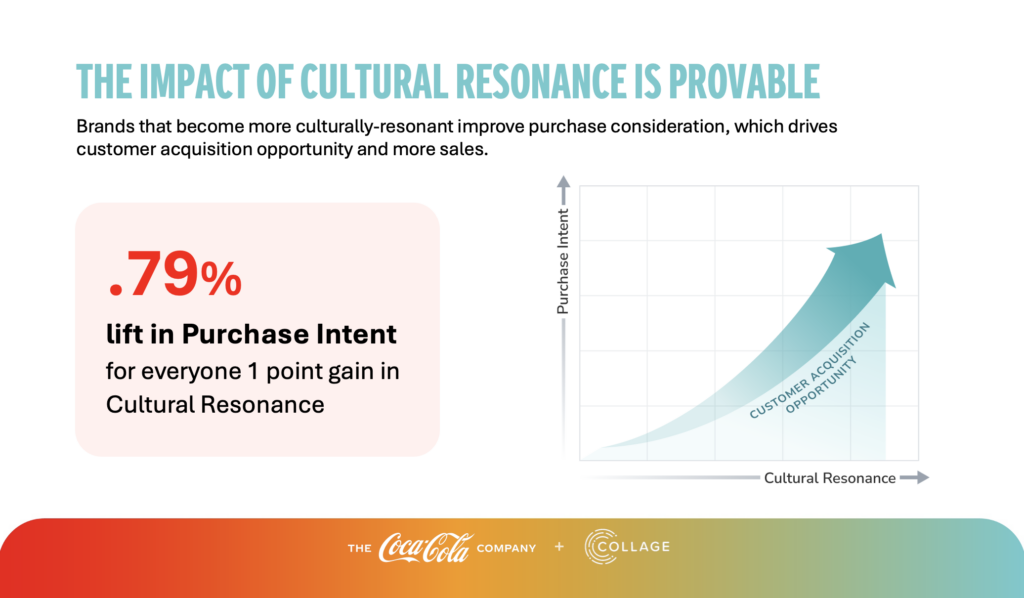
When applied to a brand’s audience size and customer value, improvements in purchase intent can represent significant revenue opportunities.
In fact, Collage’s Culture Converts research, developed in partnership with the ANA Cultural Leadership Alliance, identified $63.1 billion in modeled revenue opportunities associated with changes in cultural resonance among Gen Z consumers across four industries.
For brands, the opportunity extends beyond building stronger consumer connections. It’s about understanding how those connections can contribute to the bottom line.
How Coca-Cola Is Putting Cultural Intelligence Into Practice
For a global organization like Coca-Cola, building cultural resonance requires more than individual campaigns. It means equipping marketing teams with the understanding and tools to make culturally informed decisions across brands, audiences, and channels.
Rather than relying exclusively on cultural subject-matter experts, Coca-Cola has been working to bring cultural intelligence into the broader marketing process, from strategy and creative development to media and measurement.
As Stephanie Eaddy outlined during the presentation, the goal wasn’t to overhaul Coca-Cola’s existing processes. It was to embed cultural thinking into the workflows teams already used, making insights easier to access and apply earlier in campaign development.
Working with Collage, Coca-Cola developed workshops and a repeatable playbook to help teams improve resonance among Hispanic consumers, a key growth audience for the company.
The work moved beyond treating Hispanic audiences as a single segment, exploring how heritage, language, identity, and everyday experiences influence consumer connections.
According to Stephanie, the Para Todos campaign became Coca-Cola’s highest-testing advertisement in both English and Spanish over a five-year period.
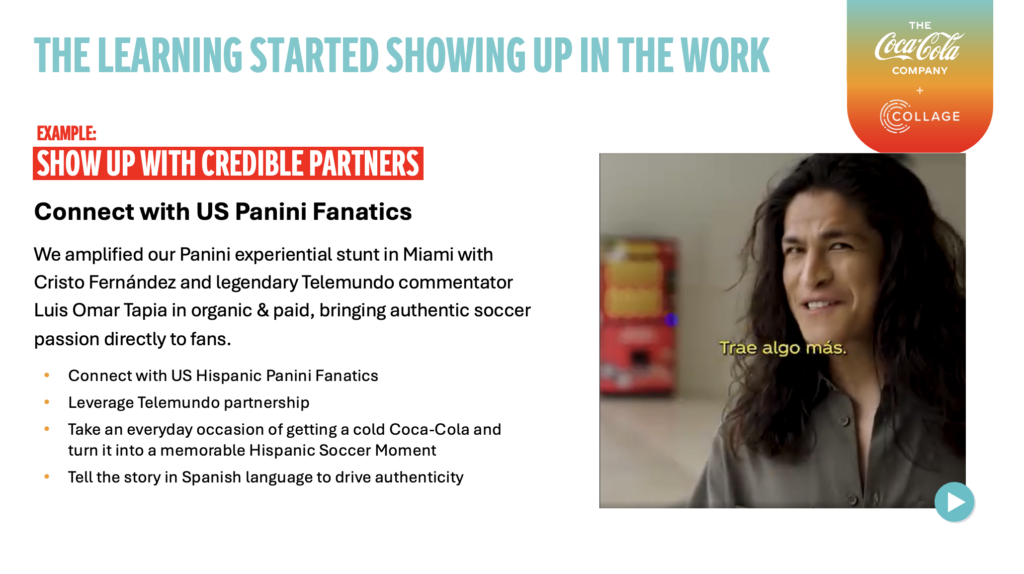
A soccer activation incorporating Panini collectibles, culturally relevant talent, and media partnerships also generated strong social engagement and the highest take rates for 20-ounce Coca-Cola products during the period compared with the prior year.
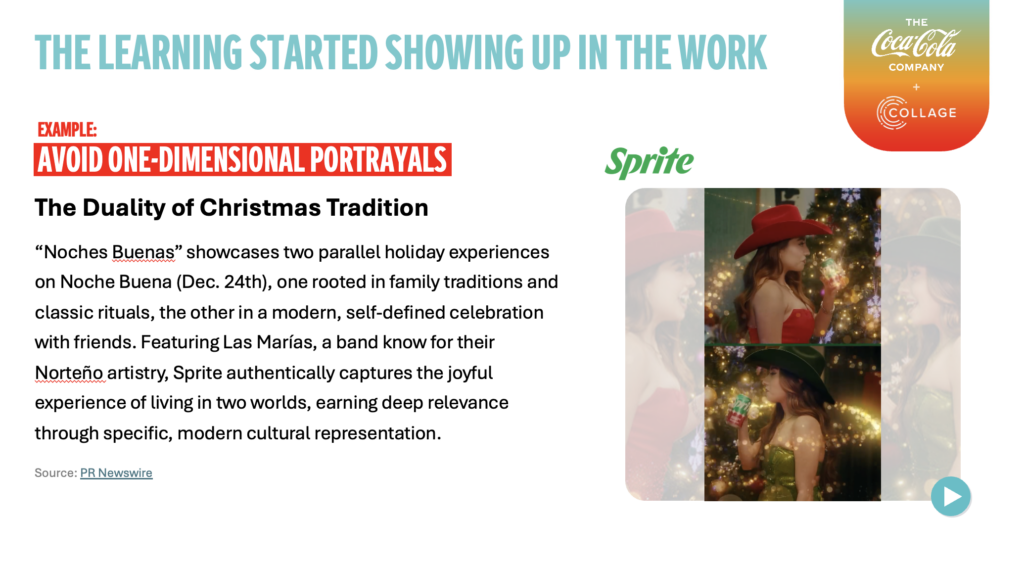
Sprite’s Noches Buenas campaign offered another example, reflecting the different ways Hispanic consumers celebrate Noche Buena.
Making Cultural Intelligence a Growth Capability
For brands, the next step is making cultural intelligence a consistent part of how marketing gets done.
That requires more than access to consumer insights. Teams also need practical frameworks, processes, and tools that help them apply those insights when developing briefs, evaluating creative, selecting media, and measuring performance.
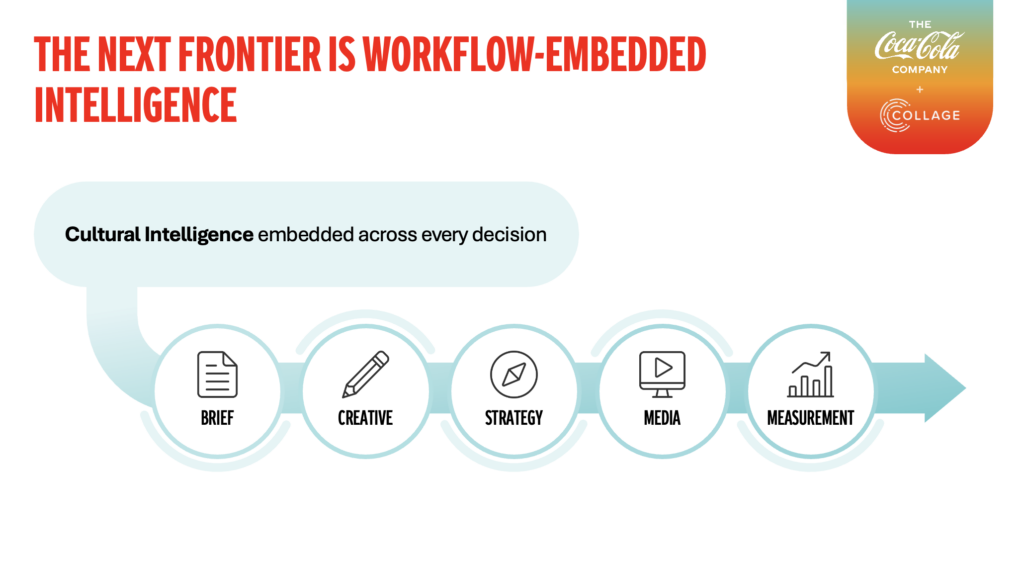
Coca-Cola’s approach highlights an important lesson for brands: cultural intelligence becomes more valuable when teams can apply it consistently, not just during major campaigns.
By building shared understanding, developing practical frameworks, and integrating cultural insights into existing processes, brands can make cultural resonance a more repeatable part of their growth strategy.
The opportunity isn’t limited to creating more relevant marketing. It’s connecting that relevance to measurable business outcomes.
Explore the Financial Impact of Cultural Resonance
How much growth could your brand be leaving on the table?
Explore Collage’s Culture Converts research, developed with the ANA Cultural Leadership Alliance, to understand how changes in cultural resonance can translate into purchase intent and modeled revenue opportunities. Take it a step further and sign up for a complimentary brand cultural resonance audit to identify the growth opportunity of a specific consumer segment.