
How the Best World Cup Campaigns Won by Putting Culture at the Center
The FIFA World Cup is one of the few moments capable of uniting billions of people across borders, languages, and identities. For marketers, that creates an extraordinary opportunity, but also raises the stakes. During a global event where every brand wants attention, creative excellence alone isn’t enough. Winning requires cultural fluency.
That was the central takeaway from Collage Group’s panel featuring leaders from Coca-Cola, Proximo Spirits (Gran Centenario), and Adsmovil. While the brands represented different industries and marketing approaches, they arrived at a remarkably consistent conclusion: the campaigns that broke through weren’t the ones with the biggest sponsorship budgets, they were the ones that understood soccer fans as people first.
Fill out the form to watch a replay of the panel. Read on for the summary of World Cup ad themes.
Winning Starts with Understanding Today’s Soccer Fan
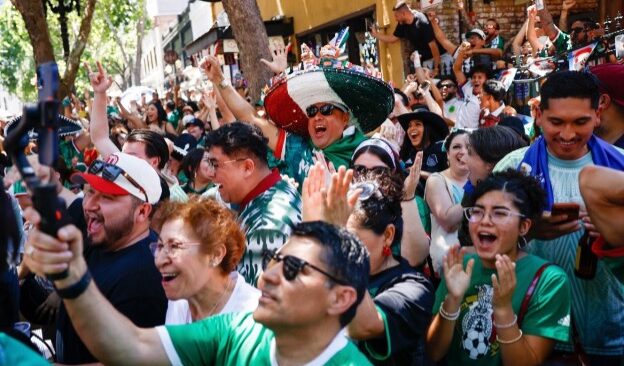
Today’s soccer fans over-index among Millennials and Hispanic consumers, audiences who are highly optimistic, globally minded, and motivated by community and cultural expression. They’re also more likely to see themselves as cultural ambassadors, proudly celebrating both heritage and diversity.
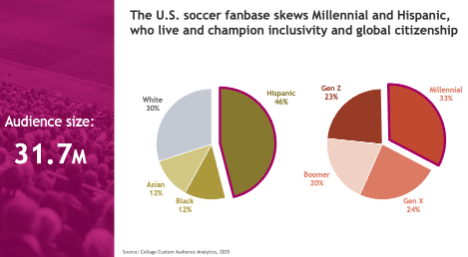
Those traits fundamentally shaped how successful brands approached the tournament. Rather than speaking at fans, winning campaigns invited them to participate, celebrate, and create culture together.
The winning ads aren’t just those we liked subjectively. Collage identifies the brands that are winning with these segments with Brand Cultural Fluency Quotient (B-CFQ), which is a weighted composite score that measures the cultural fluency of a brand. B-CFQ scores are predictive of brand Favorability and Intent to Choose.
The outcome of the ads review: 5 themes that shaped successful World Cup marketing campaigns, 3 of which are outlined below.
Theme 1: The Watch Party Became the Main Stage
One of the strongest themes discussed throughout the panel was surprisingly simple: the most important stadium wasn’t inside FIFA venues, it was people’s living rooms.
With ticket prices putting live matches out of reach for many fans, brands realized the real cultural action was happening at watch parties. That insight created opportunities for both official sponsors and brands with no FIFA affiliation.
Lay’s built its campaign around bringing people together over shared snacks, which contributed to its (B-CFQ) score of 86, up 13 points from the category average. Why did it work? Lay’s tapped into the high-engagement habit of soccer fans and turns a simple grocery run into the precursor for a memorable get together crashed by some famous friends.
Xfinity transformed the familiar experience of “everyone’s coming over” into proof of its Wi-Fi reliability–an executional example of why Xfinity’s B-CFQ is 77, 10 points higher than the category average. The ad works because Xfinity summons Latin flavor and joy in this ad, and celebrates the feeling of community joining the whole neighborhood and city for the game.
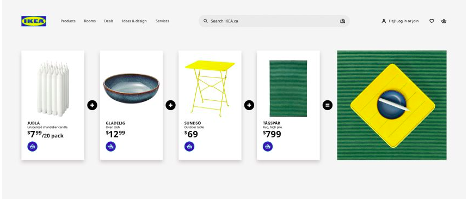
IKEA leaned into helping consumers prepare their homes for hosting, while celebrating the diversity of the teams competing with vignettes of 18 flags created from IKEA furnishings. At 78, the brand’s B-CFQ score outranks the Home Goods category average by 17 points.
The insight wasn’t simply about showing people watching soccer. It was about recognizing that community, not attendance, defines the World Cup experience.
As Coca-Cola’s Stephanie Eaddy noted during the discussion, the watch party became “the great equalizer,” giving brands of every size permission to participate authentically.
Another important lesson emerged from Adsmovil’s Jessica Ricaurte: because the tournament stretched across multiple host cities and more than a month of competition, brands couldn’t rely on a single hero campaign. The strongest marketers treated the World Cup as an ongoing content strategy, localizing messaging and creating new chapters throughout the tournament.
Theme 2: Cultural Fluidity Was More Powerful Than National Identity
While national pride certainly fueled the tournament, the panelists agreed that the most memorable campaigns celebrated what happens when cultures intersect.
Centenario Tequila offered one of the strongest examples.
Without official FIFA sponsorship rights, the tequila brand built an activation around Mexican-American identity rather than the tournament itself. Its limited-edition bottle aged tequila in barrels from all three 2026 host countries (Mexico, Canada, and the United States) while its creative embraced the bilingual, bicultural reality of many Mexican-American consumers through intentional English-Spanish code-switching.
Rather than borrowing World Cup equity, the campaign amplified the identity of its audience. This is an example of why Centario Tequila over-indexes with Heritage-leaning Hispanics with a B-CFQ score of 75, up 10 points from the category average.
The panel highlighted several other brands that leaned into cultural connection:
- Airbnb celebrated how cultures create entirely new traditions when they come together through a powerful story-telling narrative. Airbnb’s visual history of global crossovers (how Cuban rhythms birthed New York salsa, or how judo evolved into jiu-jitsu) makes for an inspiring and engaging story about how cross-cultural connection has always led to a better world. After the cross-cultural love-themed halftime, this one hit all the heartstrings. This is an example of why Airbnb’s B-CFQ score with Heritage Leaning Hispanics is 84, up 7 points from the category average.
- Buchanan’s strengthened its long-standing relationship with Latino consumers through limited-edition packaging, music partnerships, and collaborations with Kids of Immigrants. It’s these types of executions that earn the brand a B-CFQ score of 80 with Heritage Leaning Hispanics, up 15 points from the category average.
Each campaign recognized the same truth: today’s fans don’t separate culture from sport. The World Cup is just one example of where both collide.
Theme 3: Play with the Rules. Never Lose the Joy.
Soccer is full of tension. Red cards. VAR reviews. Last-minute decisions.
The most effective advertisers transformed those stressful moments into opportunities for connection.
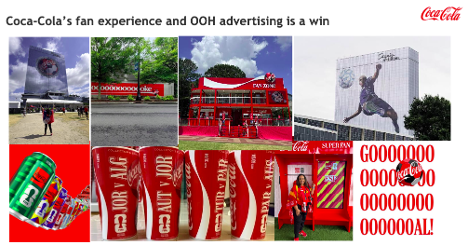
Coca-Cola’s social team famously turned every red card into a fan giveaway, converting disappointment into delight in real time. Across North America, the brand extended that joyful approach through fan zones, collectible experiences, Panini partnerships, and citywide activations that made Coke impossible to miss.
In their World Cup ad, Coca-Cola also effectively captured the beauty in the anxiety, the relief, the suspense of referee calls post the dreaded replay and video analysis–those moments that make watching the game memorable. These are examples of what earns Coke a B-CFQ of 84, up 20 from the category average.
Rather than treating soccer’s rules as constraints, brands used them as creative prompts.
The result was marketing that felt spontaneous, playful, and deeply connected to how fans actually experience the tournament.
Adidas also leaned into the joy of the game. They framed soccer through American street-sports culture while featuring a diverse mix of athletes and celebrities in Backyard Legends short film.
Cultural Fluency Is a Competitive Advantage, Not a Campaign Tactic
Perhaps the biggest insight from the conversation had little to do with creative execution itself.
Again and again, panelists emphasized that brands like Xfinity, Coca-Cola, Buchanan’s, and Gran Centenario succeeded because their World Cup work reflected years of investment in understanding diverse cultures of consumers, not a temporary sports marketing strategy.
Cultural fluency is a habit.
Brands that consistently invest in understanding evolving communities naturally recognize moments where they can participate authentically. Those that only show up during tentpole events often struggle to earn credibility.
The World Cup simply made that difference visible.
Looking Ahead: Shaping Sports Marketing
Marketers leaning into sports-marketing campaigns have an unprecedented opportunity and an equally important responsibility.
The strongest campaigns won’t simply celebrate the sport. They’ll celebrate the people who make the sport meaningful.
That means creating experiences that celebrate everyday fans, designing campaigns with a focus on the communities gathering around the game rather than inside the stadium alone, embracing cultural complexity instead of simplifying it, and treating the tournament as an evolving cultural conversation rather than a single advertising moment.
Because in the world’s biggest sporting events, brands don’t win by having the loudest voice.
They win by understanding the culture that’s already speaking.